Press briefing
Creativity, Mental Health, and Breast Cancer—Using History to Illustrate a Surprising Connection
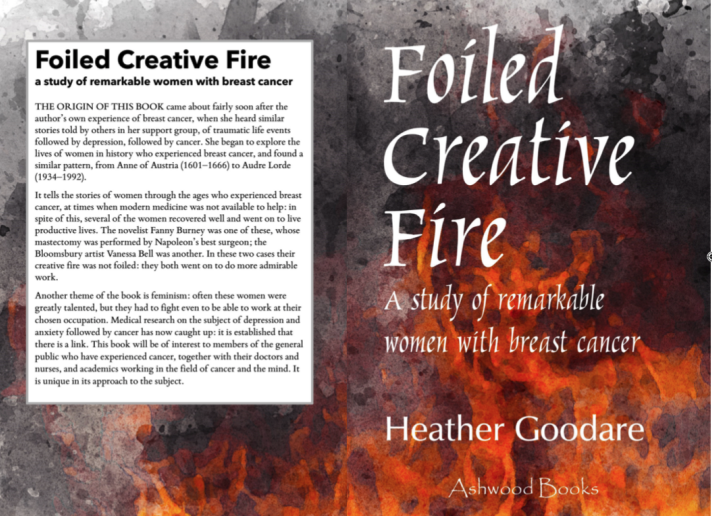
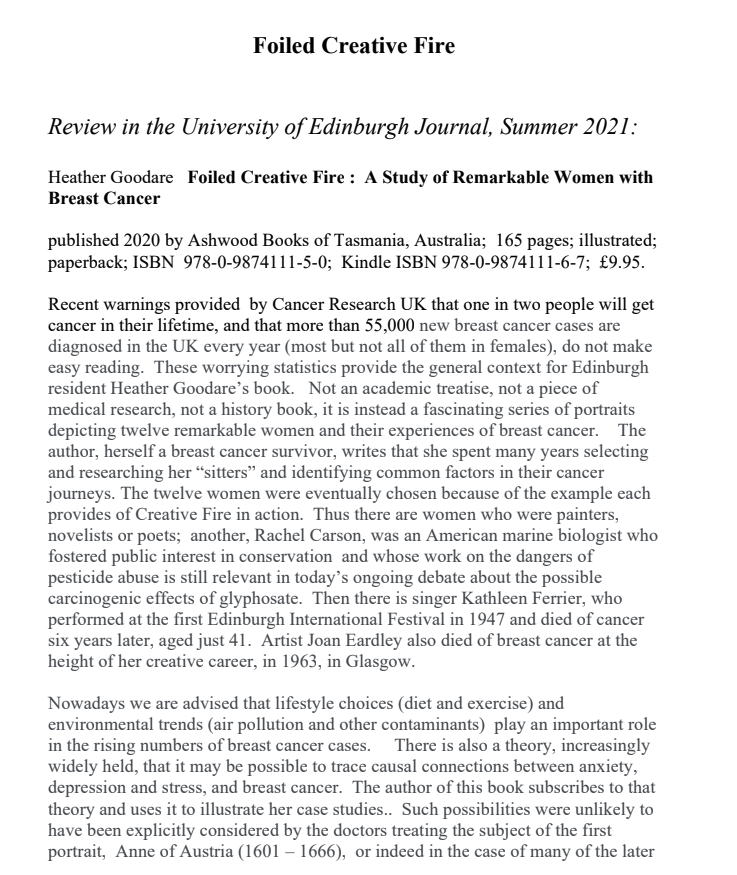
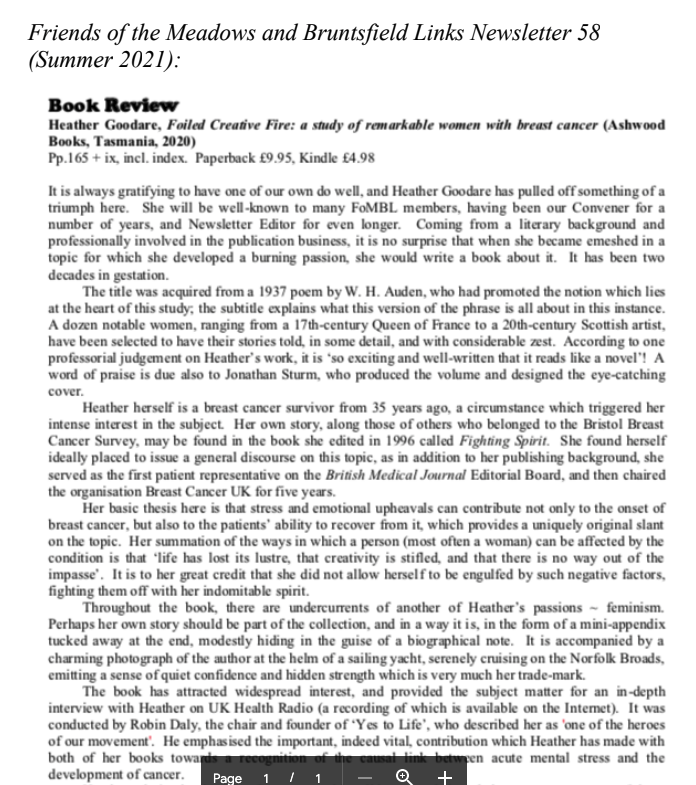
6th August 2021, Edinburgh, Scotland – one in two people will be diagnosed with cancer in their lifetime. Of this, breast cancer is the most common type worldwide. The influence of diet, exercise, and environmental factors on cancer development are well known; however, medical research has also established a link between depression, anxiety, and cancer. It is this link that is explored in Foiled Creative Fire, a book by Heather Goodare, former Chair of the Edinburgh Health Forum.
Inspired by her own experience with breast cancer, the author delves into the lives of twelve historic women to evaluate the connection between traumatic life events, subsequent depression, and finally, breast cancer. From Anne of Austria to Audre Lorde, the author paints portraits of a diverse range of women, all of whom lived lives that were fraught with struggle; she discusses how this struggle led to depression and how that depression eventually led to breast cancer. An undercurrent of feminism runs through the book, emphasizing the collective problem of patriarchal oppression, and its ill effects on all women, historical and modern. By using the example of trailblazing women—artists, writers, and politicians—the author underscores how women have to fight for recognition, and how creativity, when smothered, can manifest in harmful ways. She further encourages women to reclaim creativity in whatever form it is available to them.
Mental health care is still considered supplementary, not integral to overall health, particularly for women. Mental health services, when available, are characterized by long wait times and a lack of due consideration by professionals. The author concludes her book with a call for improved and accessible mental health care. She asserts that any approach to cancer prevention must be a holistic one. By listening to patients and providing them with mental support, breast cancer and other kinds of cancer can be avoided.