Publication
Stateless Syrians in Europe: Navigating the “Knowledge Gap”
Lack of references to statelessness in Country of Origin Information (COI) does a disservice to stateless asylum seekers from Syria.
Thomas McGee
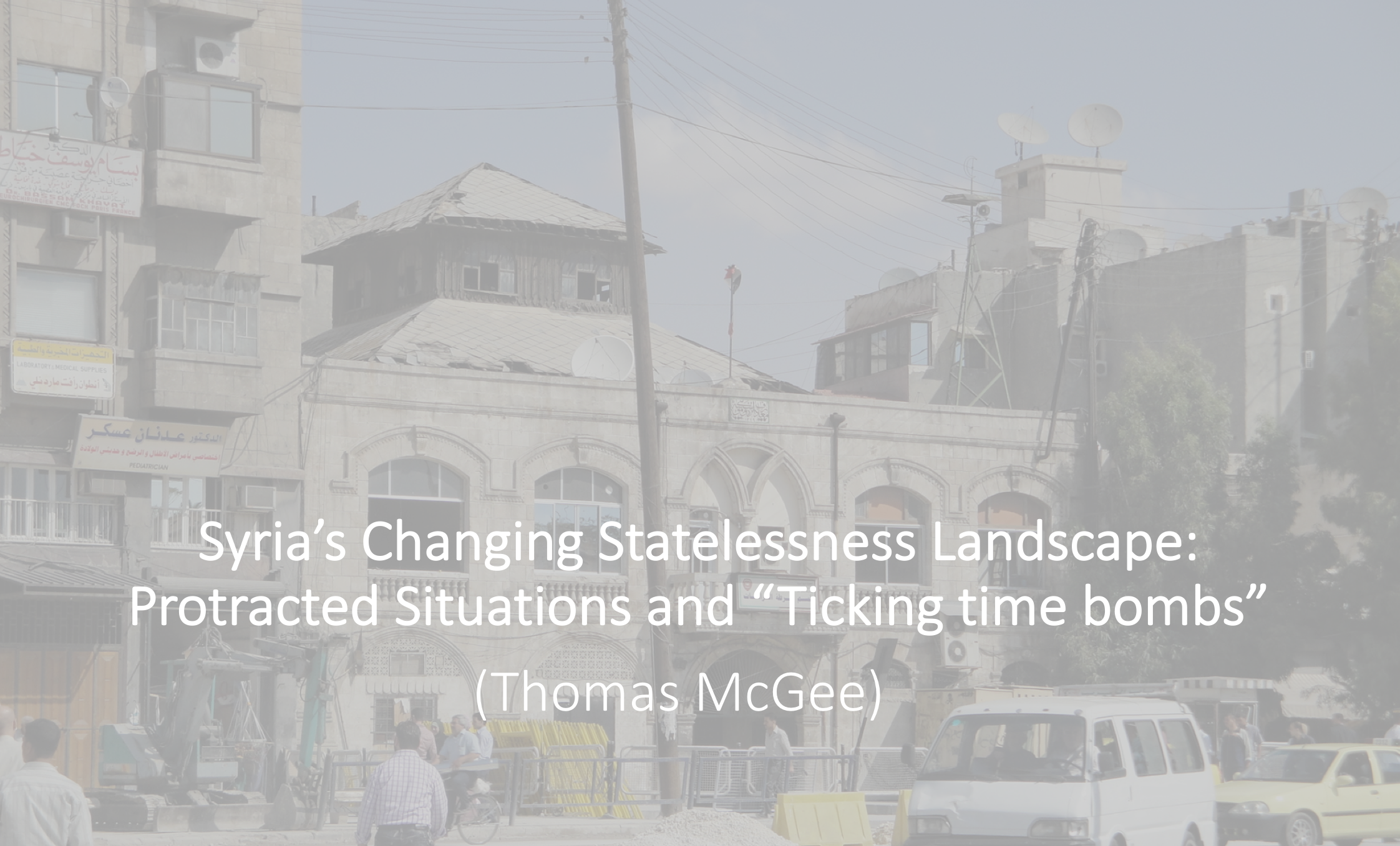
Syria is a country with several historic statelessness problems. Alongside the deprivation of citizenship from some 300,000 Kurds in the Northeast, a population of more than 400,000 Palestinian Refugees from Syria may also be considered stateless. Additionally, discriminatory legal provisions and practices that meant mothers could not pass their nationality to their children on an equal basis with fathers have created further cases (and risks) of statelessness.
The civil war in Syria since 2011 has transformed the country’s statelessness landscape in various ways. This project traces the post-2011 diversification of statelessness in, and emanating from, Syria, as well as examining the impacts of the nexus between statelessness and displacement upon Syrians. Doing so, it explores the experiences of stateless Syrians, or those at risk of statelessness, in asylum contexts. The study thus considers the expanded geographical and institutional landscape affected by statelessness issues related to Syria.
It also reflects on how Syria has become a ‘laboratory’ site for statelessness, including as the host to cases of statelessness for persons of non-Syrian origins. The legacy of non-state armed actor control and competing governance systems, including that of the Islamic State, has resulted in various new, and challenging, issues relating to legal nationality/statelessness, including children born of genocidal rape to (Iraqi) Yezidi mothers, and the complex issue of other states revoking the citizenship of foreign fighters based in Syria on grounds of “national security”.
The academic study of statelessness ‘initially emerged as the study of nationality law, leading over time to the exploration, interpretation and annotation of international standards and of domestic norms relevant to statelessness.’ In recent years, researchers have debated the emergence of a dedicated, and fully-fledged field of ‘statelessness studies’. While the academic community’s engagement on statelessness has certainly evolved, study of the subject has arguably still partially failed ‘to break free from its legal origins’. Often, works on statelessness do not self-consciously consider the implications of their approaches on the prevailing conceptions of statelessness and stateless people. This thesis therefore contributes to the recently emerging body of critical statelessness literature that draws on inter-disciplinary insights in order to challenge assumptions that have been dormant and pervasive in previous work within the statelessness sector. These include i) that statelessness problems in a country tend to have a singular cause; ii) that responses to the problem of statelessness are part of a linear trajectory of progress towards eradication; and iii) that all or most stateless persons experience generally similar hardships.
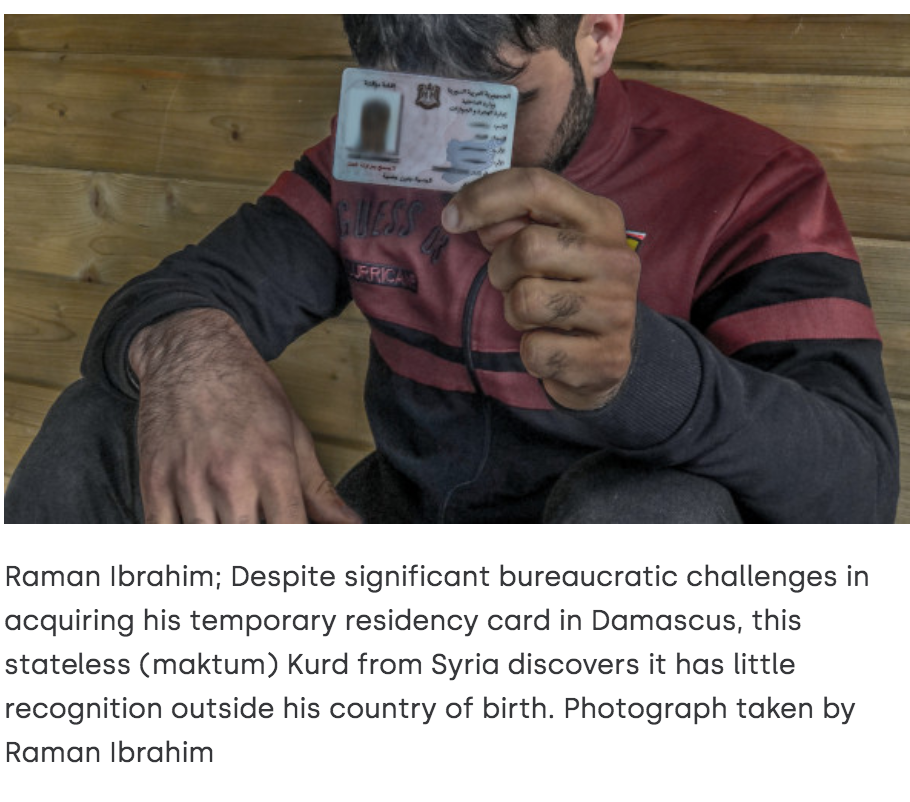
A significant gap exists in present literature around how statelessness is conceptualised within different local contexts. The thesis contributes to filling this gap by taking Syria as a case study. It focuses on the various origins and different experiences within and across the two main profiles affected by statelessness in the country: ajanib/maktumeen Kurds and Palestinian Refugees of Syria. It is here important to (re-)interrogate the global statelessness discourse, which has been largely shaped by international law and advocacy (primarily UNHCR’s IBELONG campaign to End Statelessness by 2024) in view of its accommodation of local settings. In fact, it has been argued that many languages simply do not have a clear translation for the word stateless(ness) – Arabic being no exception. The case of Syria highlights the diversity of incidences, causes and experiences of statelessness, which are often lost in existing literature. The study therefore synthesises references from disparate bodies of literature touching on statelessness to provide a more inclusive history of the phenomenon in the country, and draws on interview data to question the appropriateness of externally prescribed narratives of what it means to be stateless.
In terms of wider research impact, it is anticipated that sections of the research will be of relevance and interest to those working in refugee/asylum policy, legal practice and advocacy with regard to the situation of stateless individuals. Specifically, the study will engage with UK policy debates regarding stateless asylum seekers from Syria (in view of Syrians as the largest current group of asylum seekers) and denationalisation practices. In the case of the latter, this thesis will deliver evidence-based discussion of denationalisation to counter the sensationalised discourse of ‘citizenship stripping’ in the UK’s mainstream and tabloid media.
Considering the fact that to date the largest organised initiative focused on statelessness (UNHCR’s IBELONG campaign) is due to come to a close in 2024, the appearance of this PhD dissertation will be a timely contribution to the field of statelessness studies around that juncture. This study is further relevant in view of the fact that Syria is a state that has both had one of the largest protracted statelessness issues worldwide, and simultaneously presents some of the greatest risks of future statelessness (labelled in the media as a ‘ticking time bomb’ or a ‘future generation of stateless refugees’).
My hypothesis is that the case of Syria exposes deficiencies and limitations in mainstream presentation of statelessness as a largely static and simplified phenomenon.

University of Melbourne
Lack of references to statelessness in Country of Origin Information (COI) does a disservice to stateless asylum seekers from Syria.
Thomas McGee's most recent research project focuses on 'Syria’s changing statelessness landscape' since the start of the country’s civil war in 2011.


